
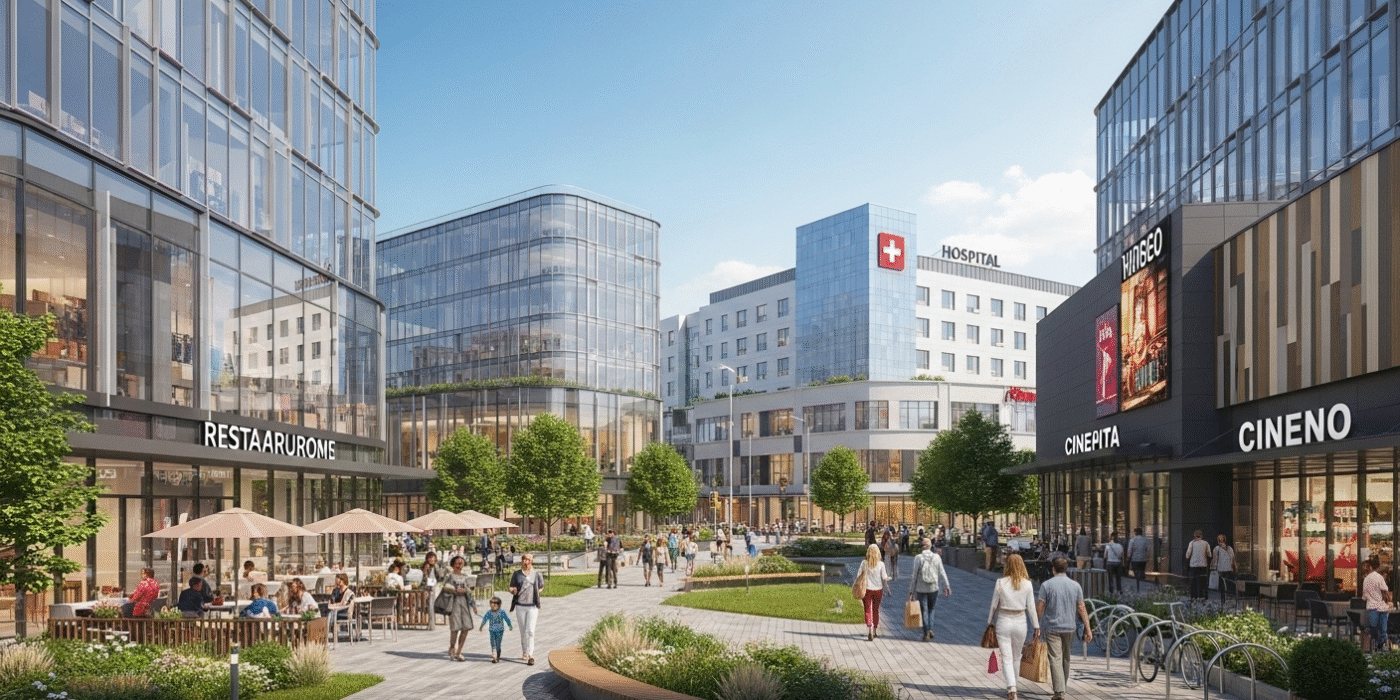
Mixed-use developments are rapidly reshaping the urban landscape, combining residential, commercial, retail, healthcare, and entertainment spaces into vibrant, self-sustaining communities. This innovative approach offers a solution to many challenges the modern city dweller faces, such as long commutes, fragmented neighborhoods, and limited access to essential services.
One of the biggest appeals of mixed-use projects is convenience. Residents can live, work, and enjoy leisure activities all within the same location or just a short walk away. This proximity fosters a better work-life balance, reduces travel stress, and maximizes time spent with family or pursuing hobbies. The Samruddhi One Campus, located in Surat’s high-demand Dindoli area, exemplifies this trend by integrating retail shops, a hospital, cinemas, restaurants, cafés, and social spaces in a seamless urban environment.
Businesses also benefit from mixed-use settings. Retailers and service providers gain access to a diverse and steady customer base from the on-site residents as well as visitors attracted to the campus’s various amenities. This mix leads to more foot traffic, increased sales opportunities, and a dynamic atmosphere that promotes commercial success.
From a sustainability standpoint, mixed-use developments contribute to lowering urban sprawl by concentrating growth in compact, walkable areas. Fewer vehicle trips translate to reduced carbon emissions and better air quality. The thoughtful design of such projects often includes green spaces, energy-efficient buildings, and infrastructure supporting eco-friendly transportation modes.
Looking ahead, the popularity of these developments is expected to grow as lifestyle preferences evolve toward community-centered, accessible urban living. For buyers and investors, engaging with projects like Samruddhi One means benefiting from well-rounded, future-ready environments that promise both quality living and financial returns.